

Running a winery in 2026 means juggling more moving parts than ever. You’ve got grapes to track from bud break to bottle, compliance reports that multiply like rabbits, and customers who expect smooth experiences whether they’re browsing your website at midnight or visiting your tasting room.
Most wineries still manage this complexity through spreadsheets and prayer. According to a 2022 report from Ekos, more than 45% of U.S. wineries still rely heavily on spreadsheets for critical operations. That might work when you’re producing 500 cases a year, but it breaks down fast when you add wine club members, wholesale accounts, and tasting room visitors.
The right technology stack can pull everything together—from vineyard blocks to customer data—so you can actually run your business instead of constantly fighting fires. Modern winery management software helps you save time, streamline operations, and focus on what matters most: producing exceptional wine and delivering memorable experiences.
Winery management software is your digital command center for the entire wine business. It connects your vineyard operations, cellar work, inventory, sales channels, and customer relationships into one coherent view.

The best systems track grapes from the vine through crush, fermentation, aging, bottling, and sale. They manage everything from TTB compliance and excise tax reporting to wine club shipments and tasting room reservations. Leading wineries in the industry rely on these platforms to manage their unique needs across every touchpoint—from production to consumer.
Nate Westfall, wine technology analyst at Vine Valley Analytics, noted in his 2025 Wine Technology Report that “over half of medium-to-large wineries in California have implemented at least basic IoT vineyard monitoring in the last few years, and that number is growing as costs come down.”
Winery management software vs. vineyard software vs. POS
These terms get tossed around interchangeably, but they’re different tools serving different parts of your operation.
Vineyard management software tracks planting blocks, spray schedules, canopy management, harvest timing, and labor. Winery production software handles crush data, fermentation tracking, barrel management, blending, and bottling. Point of sale (POS) systems manage transactions and inventory deductions. Full winery management platforms connect all these pieces into one system, giving you unified visibility across winery operations.
Key processes winery software can manage
Vineyard operations include tracking individual blocks, spray applications, labor scheduling, and harvest predictions. Production and cellar work covers crush reports, fermentation tracking, barrel management, blending trials, and bottling documentation. Inventory and warehouse management tracks bottles, corks, labels, bulk wine, and finished goods across multiple locations.
Direct-to-consumer (DTC) and wine club platforms manage membership tiers, automated shipments, and fulfillment. Wholesale and accounting features handle distributor relationships with wine merchants, retailers, and importers, plus compliance reporting, excise tax calculations, and integrations with QuickBooks or Xero. Guest-facing reservations and table management help run professional tasting room operations with online booking, experience management, and CRM tools that support wine tourism initiatives.
Benefits of winery management software

Replace spreadsheets with real-time data
Spreadsheets break when your business grows. Intuitive cloud winery software gives everyone the same current information in real time. Your winemaker checks fermentation data from home. Your tasting room manager sees real-time inventory before promising cases of sold-out wine. Your accountant pulls sales reports without asking for another CSV file. This operational efficiency means your team can manage daily operations seamlessly across multi location facilities.
Improve compliance and one system reporting
Wine regulations are complicated. Federal TTB requirements, state-by-state shipping rules, excise taxes, label approvals—miss one filing and you’re facing fines and costly audit issues. Good winery software calculates excise tax automatically, maintains audit trails, and generates reports without manually assembling data from six spreadsheets at 11 PM.
According to research published by MDPI, wineries using integrated management software improved their sustainability performance across the value chain through better tracking and reporting capabilities.
Increase sales across tasting room, online and club
Modern DTC platforms help you sell more wine to each customer. Your POS recognizes club members and applies discounts automatically. Your ecommerce site stays synced with real inventory. Your wine club management platform automates shipments but allows customization—all without bugging your staff. This integrated approach helps you maximize profitability across all sales channels.
Deliver a better guest experience and grow loyalty
When guests book online, they see available times, choose their experience, and get automatic reminders. When they arrive, your staff knows who they are and what they’ve purchased before. After the visit, automated follow-up makes them feel remembered. Smart CRM tracks preferences and triggers personalized marketing offers that build lasting relationships with clients.
Types of winery software (and how they fit together)
No single platform does everything perfectly. Most successful wineries run a technology stack—several specialized tools that work together to support their wine business goals.
Vineyard management software
These platforms track what happens in your vineyards from pruning through harvest. They manage block maps, varietal information, and farming activities. The better systems include IoT integration with weather stations and soil sensors for data-driven decisions about irrigation, canopy management, and harvest timing.
Winery production and cellar management tools
Production software manages fermentation curves, barrel inventories, blending trials, and additions. It maintains detailed TTB records and tracks costs by SKU to help you understand profitability at the product level. Good systems let winemakers access information from their phone while working in the cellar.
Wine inventory and warehouse management
Warehouse management systems track every case and bottle through barcoding or RFID. They manage bin locations, optimize picking routes for club shipments, and trigger reorders when stock runs low. For wineries doing their own fulfillment, they integrate with shipping carriers for label printing and tracking.
DTC platforms (POS, ecommerce and wine club)
DTC platforms handle tasting room sales, website orders, and wine club shipments from one shared customer database. The best systems handle compliance for shipping to different states, calculate taxes correctly, and integrate with fulfillment partners. Wine club features should include multiple membership tiers, flexible schedules, and member self-service portals that empower your customers.
Accounting, analytics and BI
Financial software connects your sales to the numbers your accountant cares about. Most wineries use QuickBooks or Xero, which need to integrate cleanly with winery software. Business intelligence tools aggregate data to answer strategic questions about margins, customer acquisition costs, wine club retention, and overall business growth.
Reservation, table management and CRM for tasting rooms
Reservation systems let guests book online, choose experiences, and prepay for tastings. Table management optimizes your floor plan. Integrated CRM captures guest information and tracks it over time—which visitors have been multiple times without joining the club, who came once and never returned, and who’s gradually increasing purchases.
You’ll likely need several tools that work together. The key is choosing tools that integrate well so data flows between them without manual re-entry, giving you the power to manage your entire operation efficiently.
How to choose the right winery management software
Start with your business model and size
A 1,000-case boutique winery with a tasting room has different needs than a 50,000-case estate with a restaurant. Small operations need solid DTC tools and can skip enterprise production software. Estate wineries with restaurants need robust reservation systems. Multi-site operations require consolidated reporting and role-based access across locations.
Map your existing tech stack and integrations
Write down every system you currently use: accounting software, payment processor, email marketing, and critical spreadsheets. Your new software needs to fit into this ecosystem. Direct integrations are best, API access is second, and manual export/import is worst. Pay particular attention to your accounting integration to ensure you can track money flow accurately.
Must-have features and nice-to-haves
Every winery needs solid inventory tracking, basic compliance reporting, and customer management. Beyond that, prioritize based on your business model. If wine club drives revenue, prioritize subscription management. If tasting room sales dominate, focus on POS features and reservation integration. Don’t pay for features you’ll never use, but choose software that can grow with you and discover new capabilities as your needs evolve.
Questions to ask vendors before you buy
Request a demo focused on your specific use cases. Ask about base pricing versus add-ons, implementation timelines, data migration, support models, update frequency, data portability, and customer references. Pay attention to how responsive the vendor is during the sales process—this reveals the level of support you can expect. Also inquire about their knowledge of the wine industry and whether they work with companies similar to yours.
Best winery management software tools in 2025
All-in-one winery management platforms
Connecteam takes a mobile-first approach to workforce management for employees in the field, cellar, or tasting room.
Best for: Team scheduling, task management, and field operations.
Key features: Mobile scheduling, digital checklists, time tracking with GPS, team communication, document sharing.
Limitations: Not purpose-built for wine production tracking or compliance.
360Winery offers comprehensive production-focused management for detailed lot tracking and compliance.
Best for: Mid-sized production-focused wineries needing robust cellar management.
Key features: Complete lot tracking, TTB compliance tools, barrel management, blending calculator, vineyard integration.
vintrace is a global platform used in 30+ countries, known for powerful production features.
Best for: Serious production operations needing laboratory integration.
Key features: LIMS integration, advanced blending, global compliance support, mobile app, detailed cost accounting.
InnoVint is cloud-based production software built for modern winemaking workflows.
Best for: Production teams wanting user-friendly cellar management.
Key features: Intuitive interface, real-time dashboards, work order management, TTB and FDA compliance, cost tracking, mobile access.
Production and inventory management
Katana is a cloud manufacturing platform adapted by some wineries.
Best for: Wineries producing multiple product types (wine, vinegar, brandy, food items).
Key features: Visual production planning, multi-location inventory, bill of materials, ecommerce integration, real-time stock visibility.
Limitations: Requires customization for wine-specific workflows.
FoodReady focuses on inventory, production, and traceability for food and beverage manufacturers.
Best for: Wineries needing detailed traceability and recall management.
Key features: Batch tracking, recall management, warehouse management with barcoding, quality control documentation, expiration tracking.
DTC, POS and wine club software for wineries
OrderPort provides ecommerce and DTC management tools for wineries and craft producers.
Best for: Wineries prioritizing online sales and club management affordably.
Key features: Wine club management, ecommerce website builder, state compliance, synced inventory, customer database.
WineDirect is one of the largest DTC platforms for wineries.
Best for: Wineries ready to invest in comprehensive DTC with fulfillment services.
Key features: Integrated POS, ecommerce, and wine club; fulfillment services; marketplace distribution; advanced segmentation; robust API; mobile POS.
Commerce7 has quickly gained traction with modern, integrated DTC management.
Best for: Growth-focused wineries wanting cutting-edge technology.
Key features: Modern responsive design, unified customer data, smart cart features, flexible wine club, built-in SEO, integrated payment processing.
Limitations: Newer platform with growing third-party integrations, though their network continues to expand.
Winery ERPs and vertical platforms
Ekos is a cloud-based ERP connecting front and back office operations.
Best for: Wineries seeking all-in-one platforms with strong production and accounting integration.
Key features: Production planning, inventory management, sales order management, accounting integration, CRM, business intelligence dashboards.
Wine Hub offers an integrated platform for wine industry operations from vineyard to sale.
Best for: Established wineries replacing multiple point solutions.
Key features: Vineyard management, cellar operations, inventory and warehouse, sales across all channels, financial management, supply chain tracking.
Reservation and guest experience software for winery tasting rooms
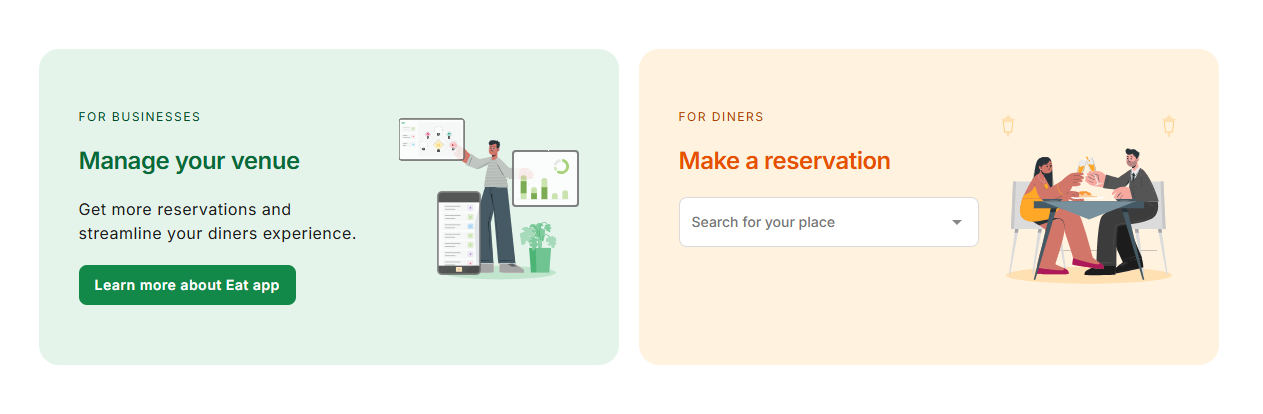
Eat App specializes in reservation and table management for wineries with tasting rooms and restaurants.
Best for: Wineries with active tasting rooms or on-site restaurants needing professional reservation management and guest CRM.
Key features: Online reservation system with custom booking widget, table management and floor plan optimization, guest CRM tracking visit history and preferences, automated email and SMS reminders, event booking and private event management, review management, POS integration, reporting on covers and guest patterns, waitlist management.
Eat App helps wineries create seamless reservation experiences while capturing customer data needed to drive club signups and repeat visits.
Drawbacks: Focused on guest experience. You’ll need separate systems for production and fulfillment.
Example winery tech stacks (by scenario)
Boutique winery with tasting room and wine club
You’re producing 2,000 cases annually, mostly selling through your tasting room and growing wine club with limited wholesale distribution.
Recommended stack: InnoVint for basic cellar tracking, Commerce7 for POS/ecommerce/club, Eat App for tasting room reservations, QuickBooks Online for accounting.
Why this works: Simple and focused on customer-facing operations. Integration between reservations, POS, and CRM ensures every guest becomes a known contact while keeping price point reasonable for smaller operations.
Production-heavy winery with limited on-site traffic
You’re producing 15,000 cases with 70% through wholesale distributors, wine merchants, and retailers.
Recommended stack: vintrace for cellar management, Ekos for distributor relationships, WineDirect for basic online sales, simple booking tool for low tasting room volume.
Why this works: Investment in robust production tools where your business lives. Wholesale management gets priority over tasting room features, allowing you to manage complex production while serving trade partners efficiently.
Estate winery with restaurant, events and large DTC program
You’re doing 10,000 cases with an on-site restaurant, regular events, and 2,000+ club members.
Recommended stack: vintrace for production, WineDirect with fulfillment for club shipments, Toast for restaurant POS, Eat App for wine tasting and restaurant reservations plus events, QuickBooks for accounting, Klaviyo for marketing automation.
Why this works: Best-in-class tools for every major function. Integration between Eat App, restaurant POS, and WineDirect creates seamless experiences for guests while providing your team with powerful tools to manage complexity and drive growth.
Conclusion
Choosing winery management software isn’t about finding one perfect platform—it’s about building the right technology stack for your business model. Start by getting honest about your priorities. If you’re DTC-focused, invest there first. If production efficiency drives profitability, prioritize cellar management. If guest experience matters most, don’t skimp on reservation and CRM systems.
If you’re running an estate winery with a tasting room or restaurant, the guest experience starts before they arrive and extends long after they leave. A professional reservation and CRM system like Eat App ensures you’re capturing every opportunity to turn visitors into club members and advocates, supporting both wine tourism efforts and direct consumer relationships.
Frequently asked questions
What is winery management software and how is it different from regular inventory or POS systems?
Winery management software handles wine-specific workflows that generic business software can’t. While a standard POS processes transactions, winery software tracks bottles back to specific barrels, manages wine club subscriptions with shipping compliance across 50 states, and maintains the audit trails TTB requires for excise tax reporting. It understands that wine changes as it ages, that bulk inventory becomes finished goods, and that you need different reporting for DTC sales versus wholesale distribution.
Which type of winery management software should a small boutique winery start with first?
Start with DTC and sales tools. Small wineries make the most profit selling directly to customers, so invest in a platform that handles your POS, wine club management, and ecommerce. You can track production in spreadsheets when you’re making 500-2,000 cases annually. Get your sales operations running smoothly first, then add dedicated cellar management software as you grow past 3,000 cases.
What are the must-have features of winery management software for tracking production from grape to bottle?
At minimum, you need lot tracking that connects specific wine to its source fruit, fermentation monitoring that captures temperature curves and additions, barrel inventory management including location and cooperage history, and blending capabilities to create final wines from multiple lots. You also need TTB compliance features to generate required reports, cost tracking to know what each SKU costs to produce, and mobile access so winemakers can update information from the cellar floor. Modern systems streamline these workflows to help you manage production efficiently.
How does winery management software help with legal compliance, excise tax and regulatory reporting?
Good winery software automates compliance burden. The system calculates federal and state excise taxes based on your shipment destinations and wine volume. It maintains the production records and inventory trails TTB auditors expect during an audit review. It generates monthly, quarterly, and annual reports pre-filled with your data.
Daftar DEMOSLOT bersama Situs Daftar DEMOSLOT Online Terbaik di Daftar DEMOSLOT
Daftar Demo Slot Game bersama Situs Daftar Demo Slot Game Online Terbaik di Daftar Demo Slot Game
Daftar DEMOSLOT PG bersama Situs Daftar DEMOSLOT PG Online Terbaik di Daftar DEMOSLOT PG
Daftar AJAIB88 bersama Situs Daftar AJAIB88 Online Terbaik di Daftar AJAIB88
Daftar DELUNA4D bersama Situs Daftar DELUNA4D Online Terbaik di Daftar DELUNA4D
Daftar AGEN138 bersama Situs Daftar AGEN138Online Terbaik di Daftar AGEN138
Daftar DAYA4D bersama Situs Daftar DAYA4D Online Terbaik di Daftar DAYA4D
Daftar SBCTOTO bersama Situs Daftar SBCTOTO Online Terbaik di Daftar SBCTOTO
Daftar KUDABET bersama Situs Daftar KUDABET Online Terbaik di Daftar KUDABET
Daftar MPO777 bersama Situs Daftar MPO777 Online Terbaik di Daftar MPO777
Daftar BINTANGSLOT bersama Situs Daftar BINTANGSLOT Online Terbaik di Daftar BINTANGSLOT
Daftar NAGA777 bersama Situs Daftar NAGA777 Online Terbaik di Daftar NAGA777
Daftar HOKI188 bersama Situs Daftar HOKI188 Online Terbaik di Daftar HOKI188
Daftar DEWISLOT bersama Situs Daftar DEWISLOT Online Terbaik di Daftar DEWISLOT
Daftar PANDASLOT bersama Situs Daftar PANDASLOT Online Terbaik di Daftar PANDASLOT
Daftar MEGA888 bersama Situs Daftar MEGA888 Online Terbaik di Daftar MEGA888
Daftar SLOT88 bersama Situs Daftar SLOT88 Online Terbaik di Daftar SLOT88
Daftar BOLA88 bersama Situs Daftar BOLA88 Online Terbaik di Daftar BOLA88
Daftar KINGBET bersama Situs Daftar KINGBET Online Terbaik di Daftar KINGBET
Daftar MASTERSLOT88 bersama Situs Daftar MASTERSLOT88 Online Terbaik di Daftar MASTERSLOT88
Daftar SENANG777 bersama Situs Daftar SENANG777 Online Terbaik di Daftar SENANG777
Daftar PANEN88 bersama Situs Daftar PANEN88 Online Terbaik di Daftar PANEN88
Daftar JAYA SLOT bersama Situs Daftar JAYA SLOT Online Terbaik di Daftar JAYA SLOT
Daftar MANTAP SLOT bersama Situs Daftar MANTAP SLOT Online Terbaik di Daftar MANTAP SLOT
Daftar SLOT RECEH bersama Situs Daftar SLOT RECEH Online Terbaik di Daftar SLOT RECEH
Daftar CUAN SLOT bersama Situs Daftar CUAN SLOT Online Terbaik di Daftar CUAN SLOT
Daftar SLOT EMAS bersama Situs Daftar SLOT EMAS Online Terbaik di Daftar SLOT EMAS
Daftar AURA SLOT bersama Situs Daftar AURA SLOT Online Terbaik di Daftar AURA SLOT
Daftar SAKTI SLOT bersama Situs Daftar SAKTI SLOT Online Terbaik di Daftar SAKTI SLOT
Daftar JAGOAN SLOT bersama Situs Daftar JAGOAN SLOT Online Terbaik di Daftar JAGOAN SLOT
Daftar PECAH138 bersama Situs Daftar PECAH138 Online Terbaik di Daftar PECAH138
Daftar BOS SLOT bersama Situs Daftar BOSSLOT99 Online Terbaik di Daftar BOSSLOT99
Daftar INDO SLOT bersama Situs Daftar INDO SLOT Online Terbaik di Daftar INDO SLOT
Daftar BATARASLOT bersama Situs Daftar BATARASLOT Online Terbaik di Daftar BATARASLOT
Daftar MACANSLOT138 bersama Situs Daftar MACANSLOT138 Online Terbaik di Daftar MACANSLOT138
Daftar GARUDASLOT bersama Situs Daftar GARUDASLOT Online Terbaik di Daftar GARUDASLOT
Daftar SATRIA123 bersama Situs Daftar SATRIA123 Online Terbaik di Daftar SATRIA123
Daftar AMAN788 bersama Situs Daftar AMAN788 Online Terbaik di Daftar AMAN788
Daftar WAHANASLOT bersama Situs Daftar WAHANASLOT Online Terbaik di Daftar WAHANASLOT
Daftar SLOTHOKI bersama Situs Daftar SLOTHOKI Online Terbaik di Daftar SLOTHOKI
Daftar MPOSLOT777 bersama Situs Daftar MPOSLOT777 Online Terbaik di Daftar MPOSLOT777
Daftar LIGABET bersama Situs Daftar LIGABET Online Terbaik di Daftar LIGABET
Daftar INDOSLOT88 bersama Situs Daftar INDOSLOT88 Online Terbaik di Daftar INDOSLOT88
Daftar MANTULSLOT bersama Situs Daftar MANTULSLOT Online Terbaik di Daftar MANTULSLOT
Daftar SLOT PINTAR bersama Situs Daftar SLOT PINTAR Online Terbaik di Daftar SLOT PINTAR
